

Thames School of Mines
Museum & heritage walk · Thames & the Thames Coast
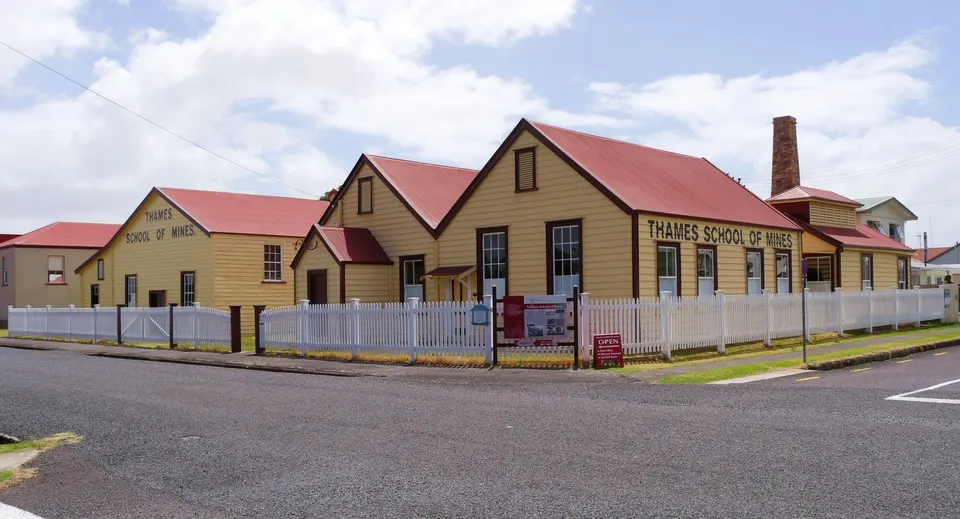
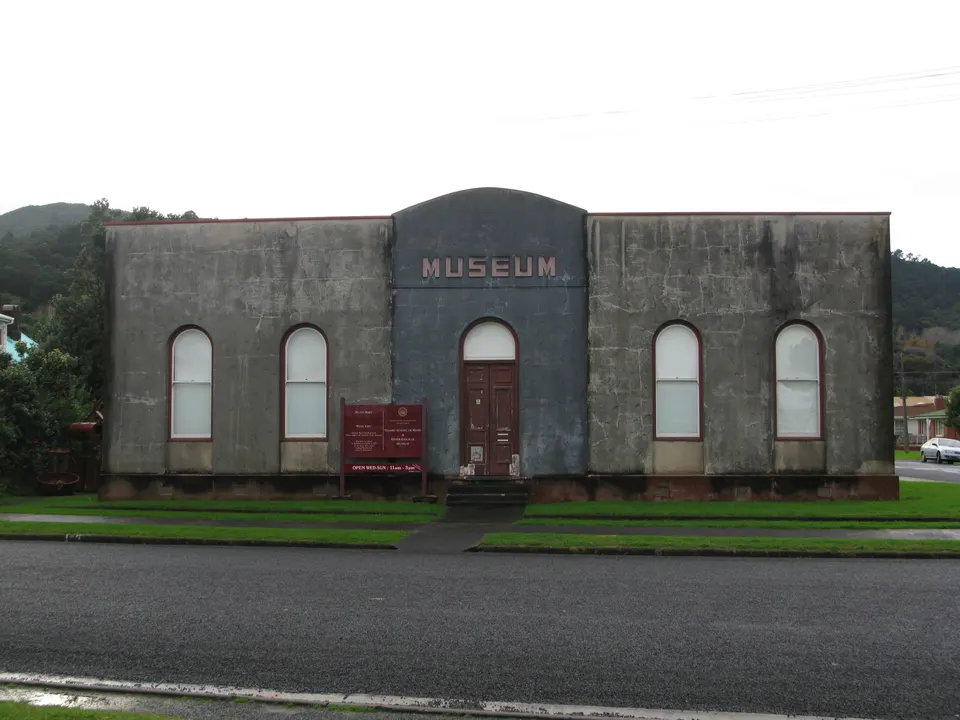
The Thames School of Mines is a group of historic buildings in Thames where mining was taught from 1886 until 1953. Heritage New Zealand runs it as a museum with guided tours, open Wednesday to Saturday from 10 am to 4 pm, and it holds one of the largest mineral collections in the Southern Hemisphere. A council heritage walk nearby leads past miners’ cottages to the Shortland Cemetery.
Good to know
| Address | 101 Cochrane Street, Thames |
|---|---|
| Open | Wednesday – Saturday, 10 am – 4 pm |
| Guided tours | 10.30 am, 1 pm and 2.30 pm |
| Price | Adults $10; under 18 free |
| Heritage status | Category 1 historic place (List No. 132) |
| Access | Steps into the school buildings, no wheelchair access there; mineral museum via the rear entrance |
| Food and drink | Not allowed on site, which is an urupā (burial ground) |
| Heritage walk | About 1 hour 30 minutes, 4.2 km, from the foot of Karaka Street |
What can you see at the School of Mines?
The tour takes you through classrooms and laboratories with period equipment, maps of the goldfields, microscopes and gold-rush machinery. You can see a model of a whole stamper battery and a small working one, and the original furnace room, where gold was extracted and assayed.
The mineralogical museum, built in 1899, holds one of the largest mineral collections in the Southern Hemisphere, according to Heritage New Zealand. The shop is in the museum building.
What is the history of the buildings?
The site began as a Wesleyan church and Sunday school in 1869. In 1886 the schoolroom became the lecture room of the new School of Mines and a brick smelting house was added; the mineralogical museum followed in 1899. Te Ara dates the school from 1886 to 1953.
The school trained mining students in a town that owed its existence to gold: Thames grew after gold was found in the lower Kauaeranga Valley in 1867. The buildings were entered on the New Zealand Heritage List as a Category 1 historic place in 1984.
What should visitors know?
The School of Mines stands on an urupā (burial ground), so food and drink are not allowed. As you leave, a bowl of water is provided for whakanoa, a Māori cleansing ritual: wet your fingers and flick a little water over your shoulder.
The school buildings have steps at the entrance and no wheelchair access; the mineralogical museum can be entered through the rear, and the shop is fully accessible. Chairs are placed around the small site. The toilets are off-site, on Brown Street.
Where does the heritage walk go?
Thames-Coromandel District Council’s Shortland Cemetery and Miners’ Cottages walks start at the foot of Karaka Street and take about 1 hour 30 minutes (about 4.2 km), past historic miners’ cottages to the cemetery.
For a flat walk or ride, the Thames Coastal Pathway runs about 3.5 km from Shortland Wharf to Kuranui Bay, with heritage sites along the way.
Questions about Thames School of Mines
When is the Thames School of Mines open?
Wednesday to Saturday, 10 am to 4 pm, with guided tours at 10.30 am, 1 pm and 2.30 pm, according to Heritage New Zealand. Check its website for public holiday hours.
How much does it cost?
An adult guided tour costs $10. Visitors under 18 and Heritage New Zealand supporters go free.
Is the School of Mines suitable for wheelchairs?
Partly. The school buildings have steps and no wheelchair access. The mineralogical museum has wheelchair access through the rear entrance, and the shop is fully accessible.
Can you eat at the School of Mines?
No. The site is an urupā (burial ground), and food and drink are not allowed. Cafés are in the town centre.
Sources
Checked 23 November 2026 against these sources. Rules, prices and times change, so check the official page before you go. How we check facts