

Opoutere Beach
Beach & short walk · Whangamatā & the south-east coast
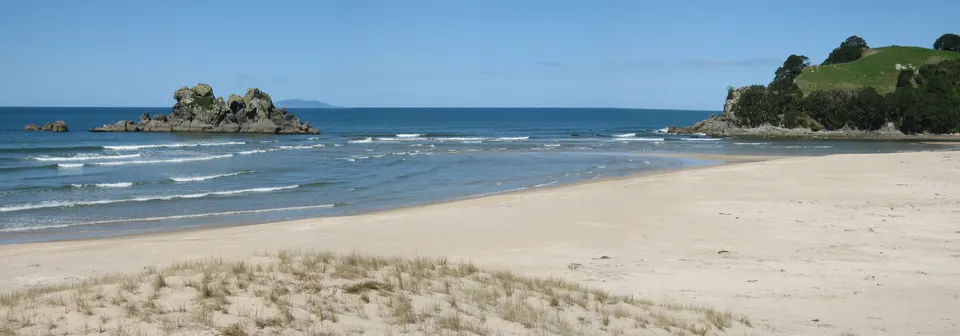
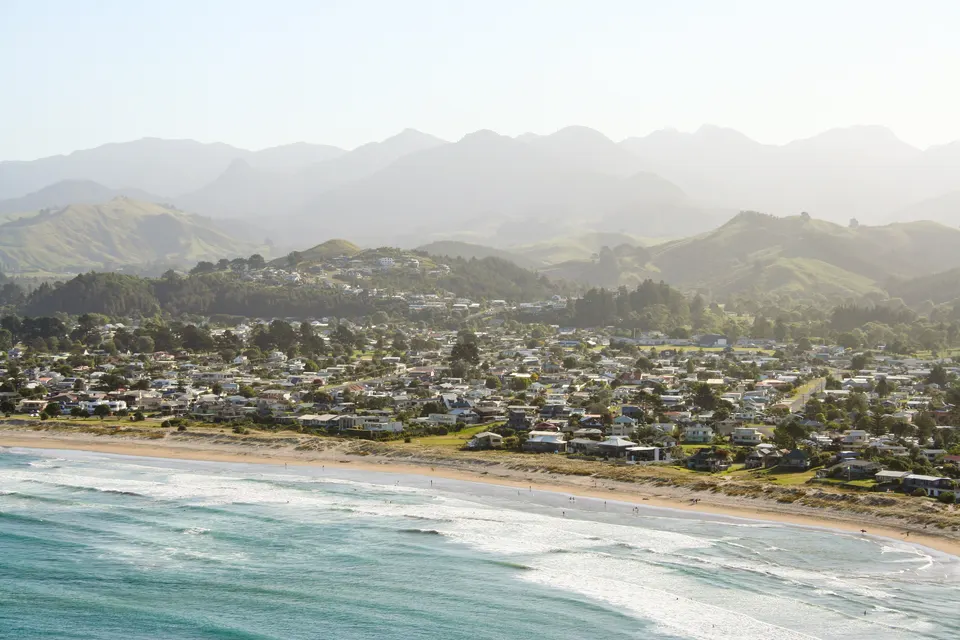
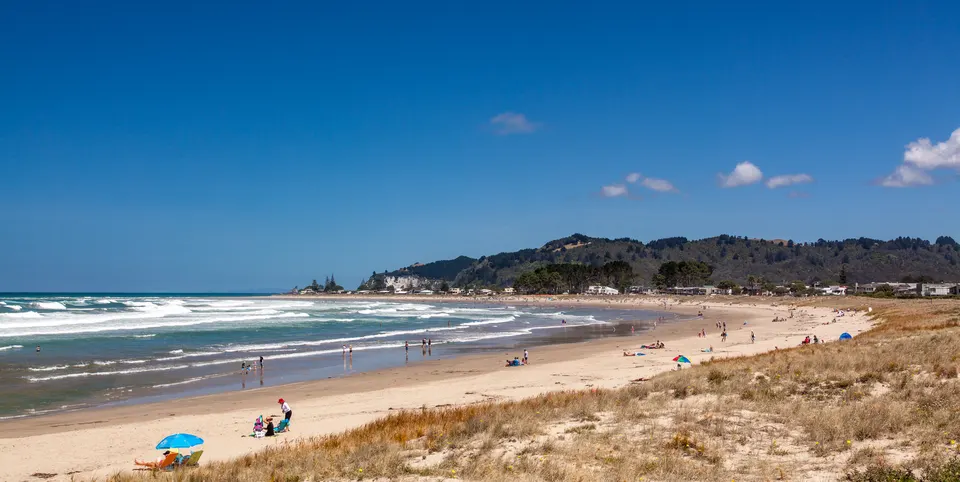
Opoutere Beach is a long, undeveloped surf beach north of Whangamatā, with the calm Wharekawa Harbour behind it and a sandspit at its southern end where New Zealand dotterels nest. A short DOC walk of 1.4 km return leads from the car park to the sand. The beach has strong rips and no lifeguards, and dogs and vehicles are not allowed.
Good to know
| Getting there | 11 km north of Whangamatā on State Highway 25, then about 4 km to the car park |
|---|---|
| Walk | 1.4 km return from the car park, easy |
| Beach | Over 5 km of white sand, with the Wharekawa Harbour behind |
| Birds | New Zealand dotterel and variable oystercatcher nest on the sandspit |
| Dogs and vehicles | Not allowed |
| Swimming | Dangerous rips; not patrolled by surf lifeguards |
| Fenced areas | Keep out: they protect eggs laid in shallow scrapes in the sand |
How do you get to Opoutere Beach?
From Whangamatā, drive north on State Highway 25 for 11 km to the turn-off to Opoutere. The car park for the walk is about 4 km along that road, on the right. From there a short, easy DOC walk, 1.4 km return, leads to the beach.
There are more than 5 km of sand, with surf on one side and the sheltered Wharekawa Harbour on the other. Te Ara describes Opoutere as the last major undeveloped sand surf beach on the Coromandel.
Why are parts of the sandspit fenced off?
The sandspit at the southern end is a protected breeding site for the New Zealand dotterel (tūturiwhatu) and the variable oystercatcher (tōreapango). Their eggs lie in shallow scrapes in the sand and are very hard to see. Each breeding season DOC ropes off the nesting areas; in 2022 the ropes went up on 3 September.
Stay outside the fences and follow the signs – a short detour still gets you to the beach. Walking through a nesting area can make the birds abandon their nests, and entering a roped-off area can lead to a fine under the Wildlife Act.
Is it safe to swim at Opoutere?
DOC describes the beach as dangerous, with many rips. Surf Life Saving NZ has said Opoutere is a remote beach that is not patrolled by lifeguards, with a double sandbar and rip currents. If you want to swim, choose a patrolled beach such as Whangamatā or Onemana and stay between the flags.
What else is there to see?
The shores of the Wharekawa Harbour have a wide range of wetland and tidal plants, and Te Ara notes there are no mangroves because the water quality is so high. The earthworks of Opoutere pā are clearly visible on the headland across the harbour entrance.
Questions about Opoutere Beach
Can you take dogs to Opoutere Beach?
No. DOC does not allow dogs or vehicles at Opoutere Beach, because endangered shorebirds nest on the sand.
Is Opoutere Beach patrolled?
No. It is not a lifeguard-patrolled beach, and DOC warns that it has many rips. In summer, surf lifeguards patrol at nearby Onemana and Whangamatā.
How long is the walk to Opoutere Beach?
The DOC walk from the car park to the beach is 1.4 km return and rated easy.
Where do you park for Opoutere Beach?
At the car park about 4 km along the road to Opoutere, on the right. The turn-off is on State Highway 25, 11 km north of Whangamatā.
Sources
Checked 23 November 2026 against these sources. Rules, prices and times change, so check the official page before you go. How we check facts
- DOC: Opoutere Beach Track
- DOC: Opoutere dotterels feel pressure of careless beachgoers (21 September 2022)
- Te Ara: Hauraki–Coromandel places – Eastern peninsula
- Te Ara: Opoutere pā site and wildlife refuge (photograph)
- NZ Herald: Surf Life Saving NZ on Opoutere Beach (19 January 2023)
- Toitū Te Whenua LINZ: New Zealand Gazetteer (place names)