

Pūkorokoro Miranda Shorebird Centre
Birdwatching · Waihī, Karangahake & Hauraki Plains
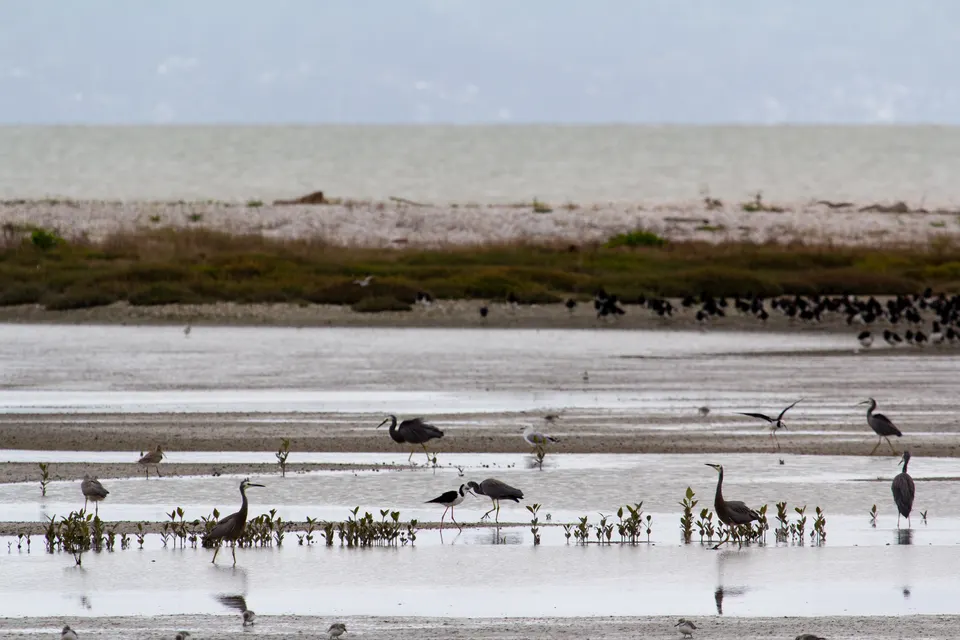
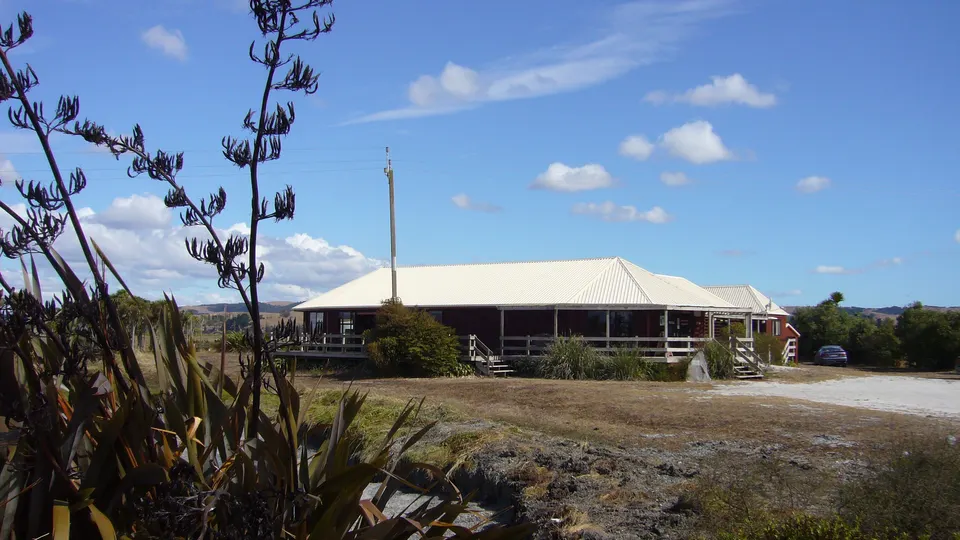
The Pūkorokoro Miranda Shorebird Centre is a free visitor and education centre on the western shore of the Firth of Thames, run by an independent charitable trust. From September to the end of March, thousands of Arctic-breeding godwits and knots feed on the mudflats. The best viewing is from the hides, about 2 hours either side of high tide; the centre is open daily from 9am to 5pm, except Christmas Day.
Good to know
| Address | 283 East Coast Road, Miranda |
|---|---|
| Open | Daily 9am–5pm, closed Christmas Day |
| Entry | Free; the trust asks for donations |
| Best time | About 2 hours either side of high tide (tide times for Thames) |
| Hides | Robert Findlay Wildlife Reserve, 2 km south: 30 minutes’ walk each way, or park there and walk 200 m |
| Seasons | Arctic migrants September to end of March; wrybill January to June |
| Extras | Guided tours (booking essential), shop, binocular and scope hire, bunkrooms and units |
What birds can you see?
DOC counts the Firth of Thames among New Zealand’s three most important coasts for shorebirds. 74 species have been recorded, and wader numbers average about 25,000 over the year, rising to as many as 40,000 in summer. The most numerous are bar-tailed godwits from the Arctic and knots from Siberia.
Some New Zealand birds spend the winter here too, among them wrybill, South Island pied oystercatchers and pied stilts. The endangered New Zealand dotterel visits in small numbers and nests at Miranda.
When is the best time to visit?
Come within about two hours either side of high tide. At low tide the birds spread out to feed across the mudflats; as the water rises they gather on the shell banks to roost, close to the hides. The centre suggests LINZ tide predictions for Thames, and its own calendar lists high tides.
Godwits and the other Arctic migrants arrive in September and stay until the end of March. Wrybill come from the South Island in January and stay until June, and some species are present all year.
How do you get to the hides?
The hides are in the Robert Findlay Wildlife Reserve, about 2 km south of the centre. You can walk there in about 30 minutes each way, or drive to the reserve and walk 200 m. The reserve has a loop track with accessible paths, boardwalks and three hides. Binoculars and scopes can be hired at the centre.
What makes this coast special?
The shell banks between Miranda and Kaiaua form a chenier plain, a landform that is rare worldwide, built mostly of old cockle shells. The banks and grass flats are the high-tide roosts. The Firth of Thames became a Ramsar wetland of international importance on 29 January 1990, covering 8927 ha.
The Pūkorokoro Miranda Naturalists’ Trust was founded in 1975 and opened the centre in 1990. Pūkorokoro / Miranda is the official place name. Te Ara records that in November 1863 HMS Miranda and the gunboat Sandfly shelled the settlement here.
Questions about Pūkorokoro Miranda Shorebird Centre
When is the best time to see godwits at Miranda?
Between September and the end of March, within about two hours either side of high tide, when the flocks roost closest to the hides.
Is the Shorebird Centre free?
Yes. Entry is free; the centre is run by a charitable trust and asks for donations.
How far are the hides from the centre?
About 2 km, or 30 minutes’ walk each way. You can also park at the Robert Findlay Wildlife Reserve and walk 200 m.
Do you need to book a guided tour?
Yes. Places on guided tours are limited and bookings are essential; private tours need at least 7 days’ notice.
Sources
Checked 23 November 2026 against these sources. Rules, prices and times change, so check the official page before you go. How we check facts
- Pūkorokoro Miranda Shorebird Centre (operator)
- Pūkorokoro Miranda Shorebird Centre: visit us
- Pūkorokoro Miranda Shorebird Centre: when to visit
- Pūkorokoro Miranda Shorebird Centre: about us
- Pūkorokoro Miranda Shorebird Centre: guided tours
- DOC: Firth of Thames (wetland of international importance)
- Te Ara: Hauraki–Coromandel places – Hauraki Plains
- Hauraki District Council: about Hauraki
- Toitū Te Whenua LINZ: New Zealand Gazetteer (place names)