

Whitianga & Mercury Bay
Whitianga · Ferry Landing · Cooks Beach · Hahei · Hot Water Beach · Kūaotunu · Matarangi
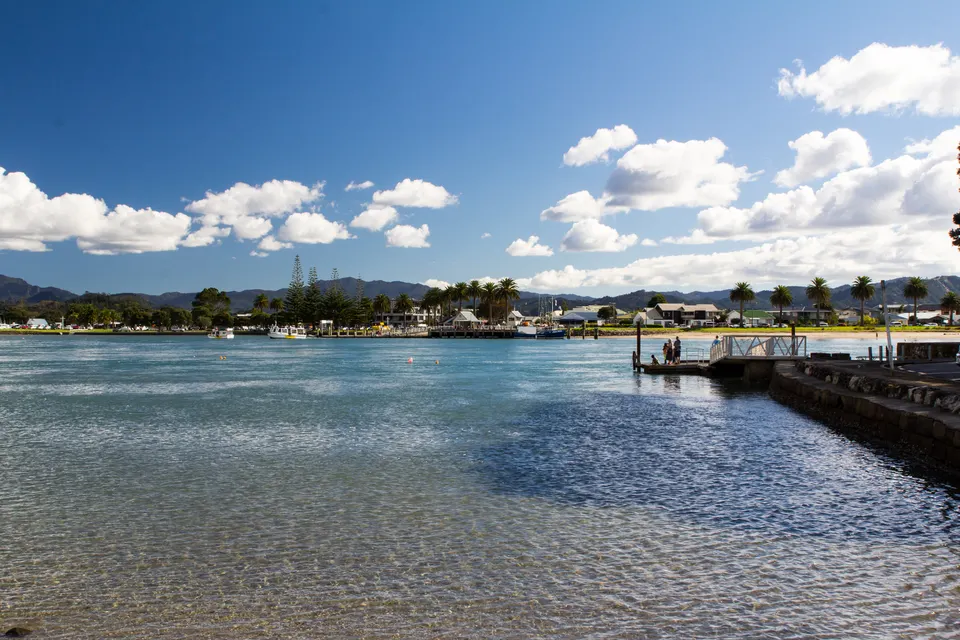
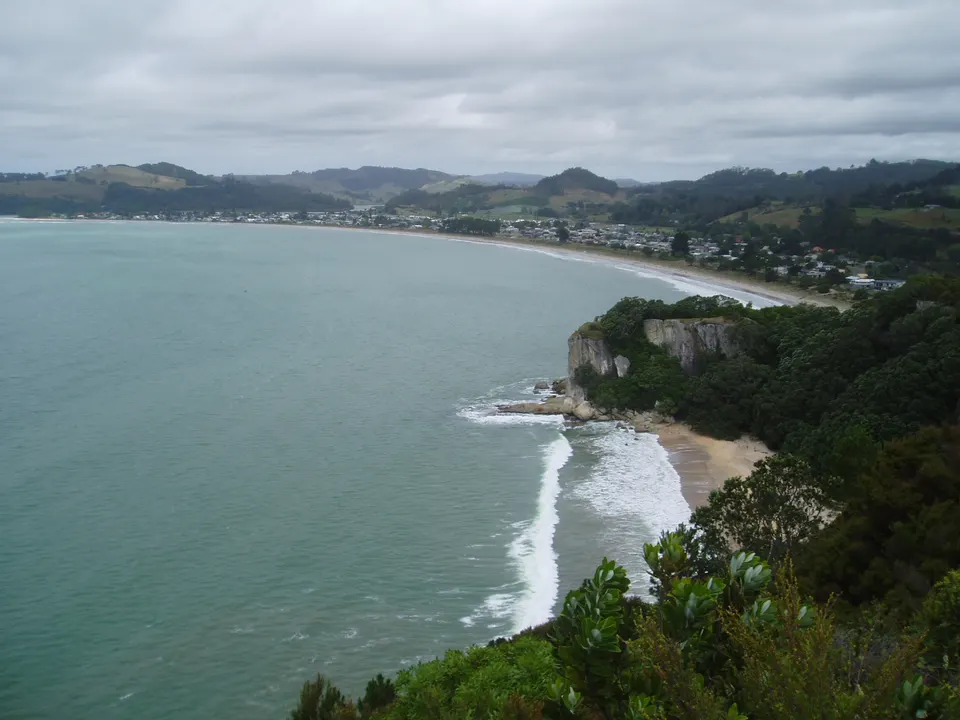
Mercury Bay is the large bay on the east coast of the Coromandel, with Whitianga as its main town. South-east of the town are Cooks Beach, Hahei, Mautohe Cathedral Cove and Hot Water Beach; to the north are Kūaotunu and Matarangi. Whitianga is about 1 hour 30 minutes’ drive from Thames, and Hahei about 3 hours from Auckland (1 hour 30 minutes to Thames, then about 1 hour 30 minutes on).
Roads on the Coromandel can close at short notice after storms – check before you go. NZTA road conditions
What is there to do around Mercury Bay?
Most visitors come for two places: the walk to the rock arch at Mautohe Cathedral Cove near Hahei, and Hot Water Beach, where you dig a hot pool in the sand around low tide. The sea between them is the Te Whanganui-o-Hei / Cathedral Cove Marine Reserve, which you can see from the beaches, by kayak or on a boat trip.
Whitianga is the main town, with the harbour, shops and the small passenger ferry to Ferry Landing on the other side of the harbour mouth. From Ferry Landing the road continues to Cooks Beach, Hahei and Hot Water Beach. North of Whitianga, State Highway 25 runs past Kūaotunu and Matarangi on its way to Coromandel Town, about 1 hour (46 km) away.
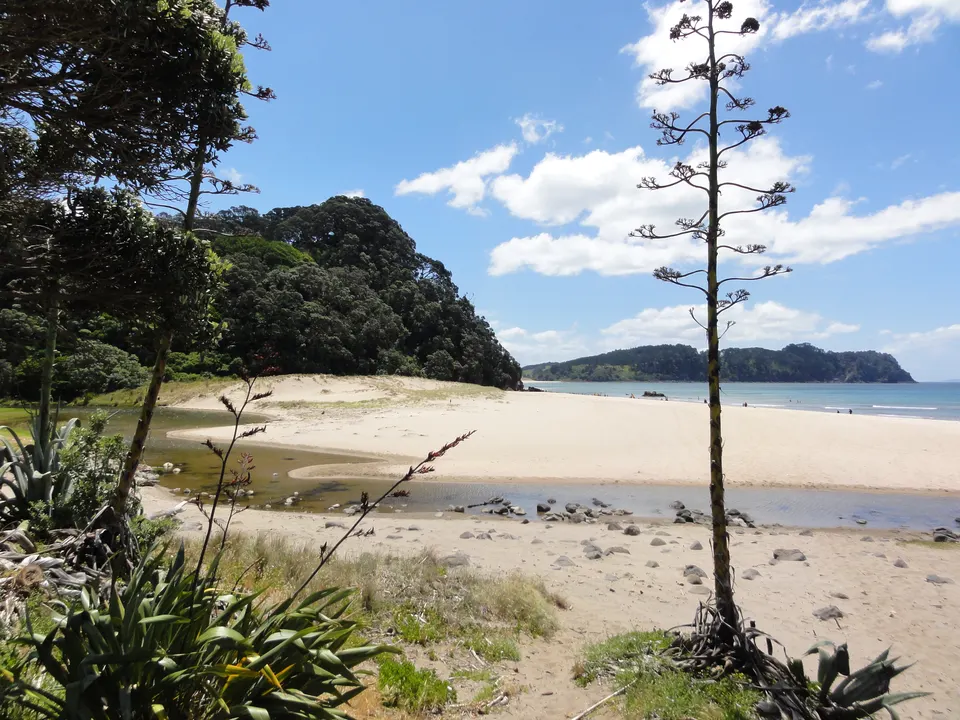
Hot Water Beach
Dig your own hot pool in the sand about 2 hours either side of low tide. A surf beach with strong rips: swim only between the flags.
Good to know & how to get there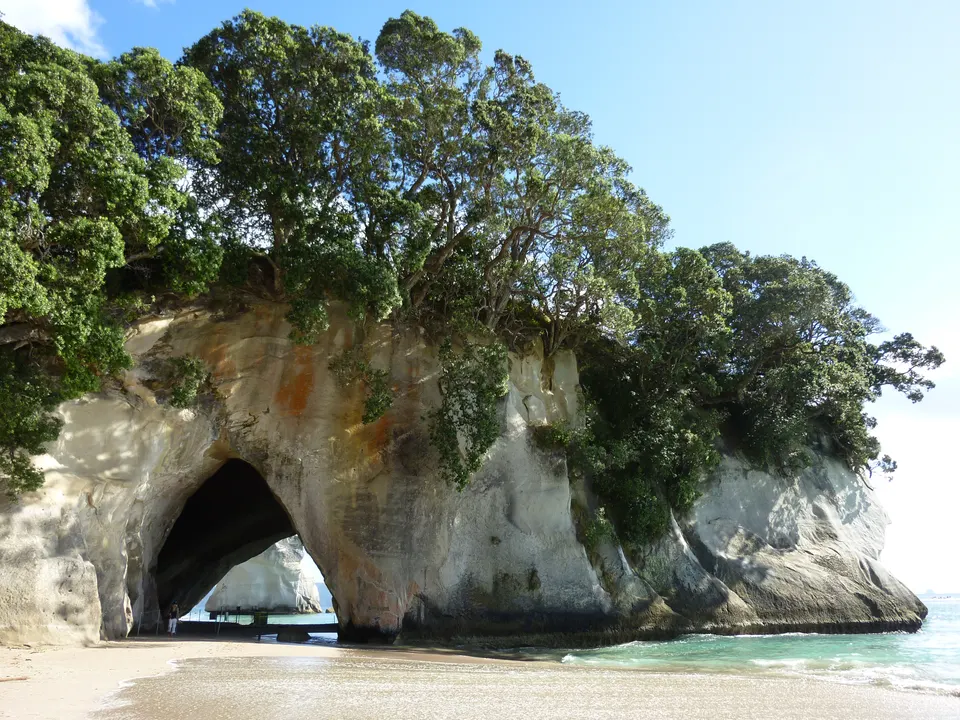
Mautohe Cathedral Cove
A walk down to the white arch and the beach. No parking at the end of Grange Road: use the Hahei Visitor Car Park or the shuttle.
Good to know & how to get there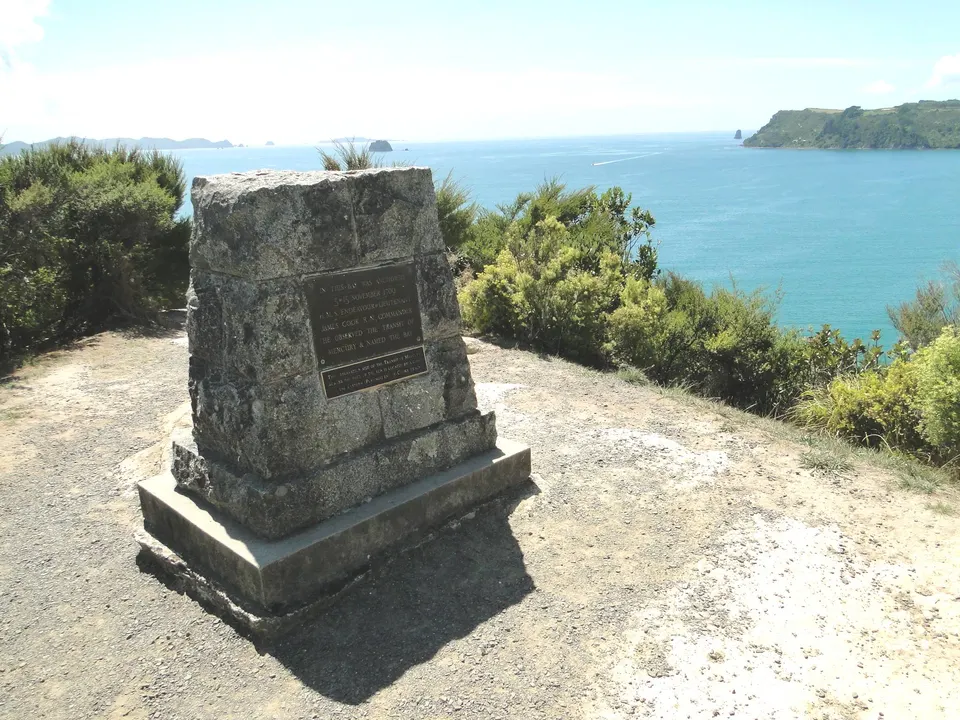
Shakespeare Cliff & Lonely Bay
A lookout above Cooks Beach with a Cook memorial, and a steep path down to the small beach at Lonely Bay.
Good to know & how to get there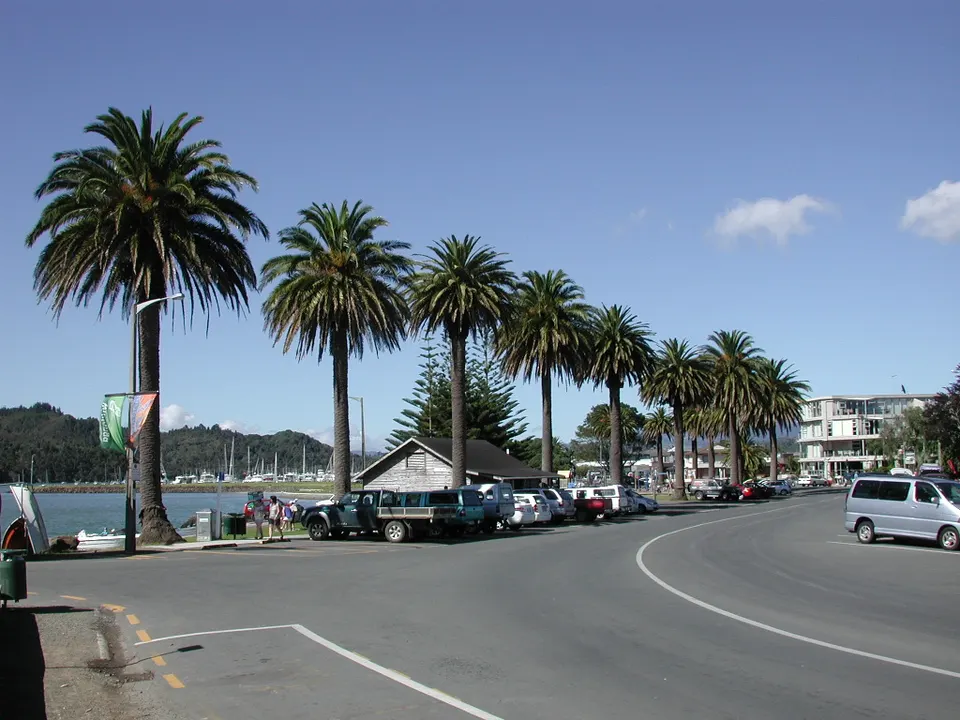
Whitianga waterfront & Ferry Landing
A waterfront path, the Mercury Bay Museum and the small ferry across the harbour to the old stone wharf.
Good to know & how to get there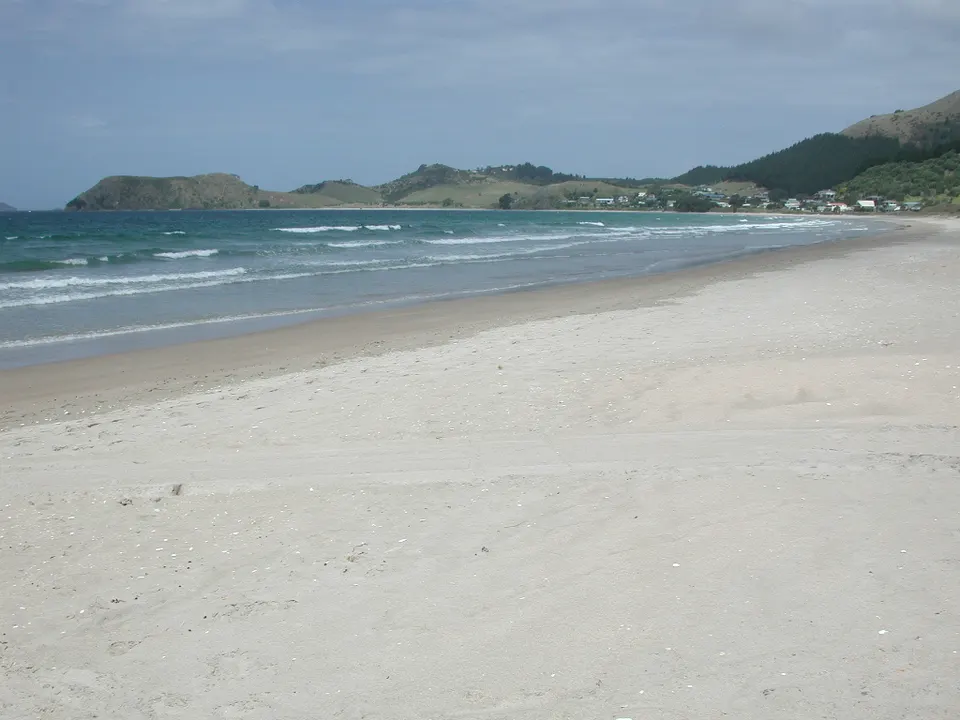
Kūaotunu & Opito Bay
An old gold-rush village on State Highway 25, and a quiet bay at the end of Black Jack Road.
Good to know & how to get thereHow do you get to Cathedral Cove?
The Mautohe Cathedral Cove track starts at the top of Grange Road in Hahei. DOC rates it easy to intermediate: it is sealed, but has steep sections and steps, and takes about 1 hour 30 minutes return. At the end, a natural rock archway leads to the beach, with the rock Te Hoho offshore.
There is no parking at the track entrance on Grange Road; it is a drop-off and pick-up zone only. Park at the free Hahei Visitor Car Park, about 30 minutes’ walk from the track entrance with a long uphill section, or take the shuttle bus from the car park. A private, paid car park on Lees Road also gives access to the track.
Do not go during or straight after heavy rain: the area has a history of landslides and rockfall. When an orange or red weather warning is issued for Hahei, DOC closes the track and the shuttles stop. The beaches are not patrolled and have rip currents.
What are the rules in the marine reserve?
Te Whanganui-o-Hei / Cathedral Cove Marine Reserve was set up in 1992. All marine life is protected: no fishing from a boat or the shore, no taking or disturbing marine life such as shellfish and seaweed, and no feeding fish. Boats must keep below 5 knots within 200 m of the shore, and you need permission from Ngāti Hei to land on Poikeke or Motueka islands.
Some side tracks around Hahei have been closed after storms or are being rerouted. Check DOC’s Cathedral Cove and Hahei updates before you plan a walk other than the main track.
How does the Whitianga ferry work?
A small passenger ferry crosses the narrow harbour mouth between the Whitianga wharf and Ferry Landing. It leaves each side about every 10 minutes during the day and runs again in the evening; bikes can go on for a small fee. It saves the drive around the harbour if you are staying in Whitianga and want to reach Cooks Beach or Hahei on foot or by bike.
Where does the name Mercury Bay come from?
The Māori name of the bay is Te Whanganui-o-Hei. James Cook named it Mercury Bay after he observed the transit of the planet Mercury here in November 1769. A cairn above Cooks Beach marks the spot.
Whitianga is short for Whitianga-o-Kupe, Kupe’s crossing place. The local iwi is Ngāti Hei. The town grew with the kauri timber trade; the Kauri Timber Company’s mill ran from about 1888 to 1922.
Questions about Whitianga & Mercury Bay
How long is the walk to Cathedral Cove?
About 1 hour 30 minutes return from the track entrance on Grange Road, Hahei, according to DOC. The track is sealed but has steep sections and steps. From the Hahei Visitor Car Park add about 30 minutes each way, or take the shuttle.
Can you park at Cathedral Cove?
No. The end of Grange Road is a drop-off and pick-up zone only. DOC asks visitors to use the free Hahei Visitor Car Park and the shuttle, or the private paid car park on Lees Road.
When can you dig at Hot Water Beach?
About 2 hours either side of low tide, according to the Coromandel’s regional tourism organisation. Check the tide times for the day before you go.
Can you fish at Cathedral Cove?
No. The sea around Cathedral Cove is the Te Whanganui-o-Hei / Cathedral Cove Marine Reserve. Fishing and taking or disturbing any marine life are banned.
How far is Whitianga from Auckland?
Thames-Coromandel District Council gives about 1 hour 30 minutes from Auckland to Thames and another 1 hour 30 minutes from Thames to Whitianga.
Sources
Checked 23 November 2026 against these sources. Rules, prices and times change, so check the official page before you go. How we check facts
- DOC: Mautohe Cathedral Cove walk
- DOC: Cathedral Cove and Hahei updates
- DOC: Te Whanganui-o-Hei / Cathedral Cove Marine Reserve
- Thames-Coromandel District Council: travel times (PDF)
- Whitianga Ferry (operator)
- Destination Hauraki Coromandel: Hot Water Beach
- NZHistory: Captain Cook observes transit of Mercury
- Te Ara: Hauraki–Coromandel places – Whitianga and Mercury Bay
- Toitū Te Whenua LINZ: New Zealand Gazetteer (place names)